


FOREX TRADING REVIEWS



FOREX TRADING GUIDES


101 Guide of Forex Trading
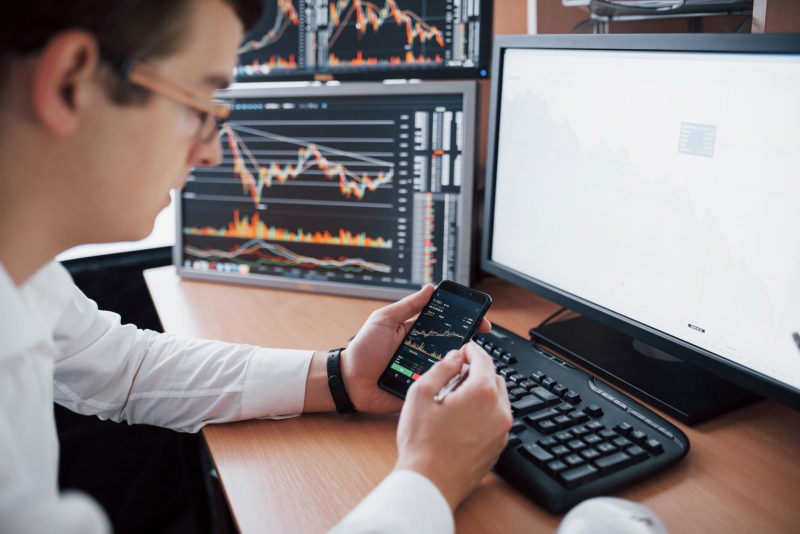 Forex is an armor of international currencies and trade. Foreign exchange is a mechanism of transition from one currency to another for several purposes, typically for investment, trade, or travel. According to a new triennial survey by the Fund for International Settlements (the financial bank for national central banks), the total daily forex trade volume was more than $5.1 trillion.
The foreign exchange market (also known as FX or forex trading) is a worldwide market for the interchange of national currencies against each other. Because of the global reach of trade, banking, and investment, forex markets tend to be the biggest and most liquid investment markets in the world.
What Is Forex Market?
The forex trading market or the foreign exchange market is where the money is exchanged. Currency is important to most citizens around the world, if they know it or not since currencies need to be traded to perform global trade and businesses. If you live in the U.S. and wish to buy Swiss chocolate, then you or the business that buys Swiss chocolate must pay the Swiss chocolate making company Swiss franc. This means that the U.S. importer will have to trade the same amount of the U.S dollars to the Swiss franc.
One peculiar feature of this multinational economy is that there is no centralized foreign exchange market. Instead, currency trading is performed electronically over-the-counter (OTC), which ensures that all transactions are done through computer networks on forex software between dealers around the globe, rather than via one centralized exchange platform.
The market operates 24 hours a day, 5 and a half days per week, and currencies are exchanged around the globe in major financial centers in London, New York, Tokyo, Zurich, Frankfurt, Hong Kong, Singapore, Paris, and Sydney—nearly any time zone. This implies that as the trading day in the U.S. finishes, the forex trading market begins again in Tokyo and Hong Kong. As such, the forex market can be highly active at every time of the day with price quotes rapidly shifting.
History of Forex Trading Around the Globe:
Unlike most of the stock markets, which can trace their origins back to decades, the forex market as we perceive it nowadays is truly modern. Of course, in the simplest sense—that of people exchanging one currency for the next for financial advantage—forex has been around since countries started issuing new currencies. Yet modern forex markets are modern innovations.
Since the Bretton Woods agreement of1971, more global currencies were permitted to move freely against each other. The prices of different currencies shift, which has contributed to the need for foreign exchange facilities and trade. Corporate and institutional banks are trading most of the forex markets on behalf of their customers, but there are also speculative options for specialist and retail investors to exchange one currency against another.
Types of Forex Markets:
There are three avenues for banks, companies, and individuals to exchange forex: the spot market, the forward market, and the futures market. Forex spot trade has historically been the biggest market, and it is secured by real commodity on which forward and futures markets are dependent. In history, the futures market has been the most common trading platform since it has been open to retail investors for a lengthy period.
Although with the implementation of digital trading and various forex traders and forex software, the spot market has experienced a major surge in demand and is now surpassing the futures market as the favored trading market for retail investors and foreign buyers. When people are referring to the forex market, they generally refer to the spot market. Forward and futures markets were found to be more common for businesses who need to hedge exchange rate risk on a certain date in the future.
More precisely, the spot market is where the money is purchased and traded at the present price. This price, calculated by production and consumption, represents several factors, including current valuations, economic performance, a sense of ongoing political circumstances (both domestically and globally), as well as a view of the potential performance of one currency versus another.
When an arrangement is agreed upon, it is known as a “spot deal.” It is a mutual trade in which one side delivers the negotiated amount of the money to the second party and collects a defined amount of another currency at the decided currency rate. Since the arrangement has been locked, the settlement is in cash. Since the spot market is widely regarded as one that deals with trades in the present (rather than in the future), these deals usually take two days to process.
Unlike the spot market, forwards and futures contracts do not exchange real currency. Instead, they negotiate with contracts that reflect statements of a certain asset type, a certain cost per unit, and the potential date of the agreement. In the forward market, OTC contracts are acquired and exchanged by parties involved who negotiate the details of the deal between them.
Future contracts are acquired and exchanged on the futures market based on the normal scale and delivery date on the public commodity markets. Future contracts have precise specifics, including the number of units exchanged, the dates of distribution and settlement, and the minimal premium changes that cannot be modified. The Exchange shall serve as a counterpart to the dealer, offering clearing and payment.
All forms of contracts are contractual and are normally exchanged for cash on the market in question after the period, while contracts can often be acquired and sold before they expire. Forward and futures markets may provide risk protection when investing in currencies. Typically, major multinational companies use these markets to protect against possible exchange-rate volatility, but speculators also invest in these markets.
Notice that you can also see the following terms: FX, forex, forex trading, forex reviews, forex software, foreign exchange market, and currency market. These words are interchangeable and are tied to the forex industry.
Best Forex Trading System:
Because now you know the fundamentals of forex trading, the next move is to pick the right Forex trading method for beginners. Fortunately, banks, companies, brokers, and speculators have been investing in markets for decades, which mean that there are now a wide variety of forms of Forex trading techniques and forex trading software to choose from. This includes the following:
- Currency Scalping: Scalping is a form of forex trading that consists of buying and selling foreign currencies in very brief periods, normally between a few seconds and a few hours. This is a very realistic approach that includes making a huge number of small gains in the expectation that those profits will multiply.
- Intraday Trades: Forex intraday dealing is a more traditional method for newcomers. It reports on four-hour or one-hour price patterns. It reports on four-hour or one-hour price patterns. In specific, they concentrate on the key sessions of each Forex sector.
- Swing Trading: Swing forex trading is a moderate trading strategy that relies on greater market fluctuations than scalping or intraday forex trading. This ensures that merchants will keep their exchange open for days or weeks. This style of trade is a good choice for those who trade as a supplement to their everyday jobs.
To compare and know which strategy is perfect for you, it is recommended to read different forex guides and forex reviews and also visit different forex software and use their free trial account to see and test for yourself and choose the right one for you. It is highly crucial that you choose the right strategy and technique for forex trading to make profits and not lose anything and also to have a good experience while doing it.
How to Choose the Best Trading Software for Beginners:
In addition to selecting a dealer, you can also review the currency trading tools and forex software and platforms that they sell. The forex software is at the core of your trading and your key job tool. When assessing a forex trading site or forex software, even more so if you are a Forex novice, make sure it contains the following elements:
- Do You Trust Them:
Can you trust your trading platform or trading software to deliver the results you expect? In addition to being able to rely on the precision of the quoted values, the speed of the data transmission, and the swift execution of orders, it is important to be able to exchange Forex successfully and perform proper forex trading Perhaps more so if you’re intending to use very short-term tactics, such as scalping.
The details must be accessible in real-time and the website should be available at all hours while the Forex market is open. This means that you can make the most of every chance
- Are They Secure?
Will your assets and your details be kept safe? A trustworthy Forex trader and a good Forex trading site or forex software will take precautions to ensure that the information is secure, along with the plan to back up all main account details.
It would also separate your funds from its assets. If the broker is unable to explain the measures, they would take to secure the balance in your account, it is best to find another broker.
- Do They Offer Independent Account Management?
Any Forex trading platform can empower you to run your company and your account separately, without needing to ask your broker to operate on your behalf. This means that you can respond as quickly as the market moves, focus on openings as they emerge, and control every available place.
- Do They Provide Analysis?
Does the interface provide an integrated analysis, or does it provide tools for autonomous, fundamental, or technological analysis? Many Forex software deals using technical metrics and can trade even more easily if they can view this information on the trading site rather than having to exit the platform to find it. This should include maps that are updated in real-time and links to up-to-date market statistics and reporting.
Again, you need to make sure that you choose the right forex software or forex trading platform for yourself to fully enjoy the profit and experience of forex trading. It is highly recommended to read forex guides and forex reviews for particular forex trading sites to make sure it suits you perfectly and that is what you are looking for.
Why Use a Forex Trading Site to Do Forex Trade?
Currency dealing before the Internet was very difficult for private investors. Many market players were big international firms, hedge funds, or wealthy investors since forex trading took a lot of money. With the aid of the Internet, a retail market for market participants has emerged, offering convenient exposure to international exchange markets, through either bank directly or through secondary market brokers. Many online brokers or traders give very high leverage to market participants who can manage big transactions with a limited account balance.
Conclusion:
For traders—especially those with restricted funds—day trading or swing trading in small quantities is easier on the forex market than on other markets. Focusing on knowing the macroeconomic fundamentals underlying currency prices and expertise in technical research will allow new forex traders to become more efficient. Forex trading is today the most successful and open market. Its rewards outweigh the risks if you’re aware of them and able to make your choices.
The Forex market is especially attractive for beginners because it helps you to deal in small quantities, which could be more difficult in other markets. First and foremost, be mindful of the laws in different countries and be sure to always study the brokers before taking any decisions. And remember to do your homework in terms of reading forex reviews and forex guide and choose the right option for you whether you are choosing the forex trading site or forex software to start your forex trade.
Content Brought to You By GoSmokeFree.co.uk